
When is consolidation worth evaluating?
Evaluate consolidation when recurring workloads overlap across tools, contracts approach renewal, or handoffs repeatedly consume team time. Decide what to consolidate, retain or defer using required output coverage, full ownership cost and migration risk. Test a reversible switch before retiring software. Fewer subscriptions are useful only when essential requirements remain satisfied.
A smaller contract list does not automatically create a simpler operating model. Your team might save one subscription while adding manual finishing, extra review or a new integration. Conversely, retaining a specialist tool can be sensible when it handles a small but essential task reliably.
Start with a specific business trigger: a renewal, a growing recurring workload or an expensive handoff. Define the outputs that must remain acceptable. This article evaluates the software portfolio and migration decision; AKOOL's team workflow guide provides background on organizing production itself.
Which recurring workloads and contracts could actually move?
Build a workload inventory before comparing subscriptions. Describe what the team delivers, how often it delivers it, who owns it, and where the final asset goes. Include the current tool, actual usage, renewal date, input rights, acceptance requirements and downstream dependencies.
Split requirements into critical and optional. A critical export format or contractual control can determine the decision even when many optional features overlap. Similar feature names do not establish that two systems deliver equivalent results.
Use this coverage matrix as a template. All candidate statuses below remain untested until your pilot produces evidence.
| Workload | Requirement to verify | Priority | Candidate status | Owner and dependency |
|---|---|---|---|---|
| Recurring campaign clips | Approved format, product depiction and export destination | Critical | Untested | Production lead; finishing workflow |
| Market variants | Local acceptance, captions and revision route | Critical | Untested | Regional lead; qualified reviewer |
| Brand graphics | Required artwork treatment and usable output files | Critical where specified | Untested | Design owner; asset library |
| Campaign drafts | Convenient reuse of approved inputs | Optional unless operationally required | Untested | Campaign owner; shared sources |
Replace the illustrative workloads with your real ones. Mark coverage verified, partial, unmet or untested, attaching evidence and conditions to each judgment. Partial coverage means a named gap remains; it is not a softer word for complete replacement.
Which costs belong in the business case?
Compare the current and proposed stacks over the same period and workload. Choose a period that includes relevant renewals and transition costs. Separate steady-state spending from the cost of making the switch.
Recurring cost includes subscriptions, seats, usage, retained specialist tools, review labor and finishing. Transition cost includes migration, training, integration, parallel running and exit work. Allocate shared subscriptions consistently, and avoid counting the same included usage both inside the subscription and again as a separate charge.
The worksheet below uses invented figures solely to demonstrate the calculation. It is not AKOOL pricing, a measured customer saving or a migration benchmark.
| Cost over the same illustrative 12 months | Current stack | Proposed stack |
|---|---|---|
| Subscriptions and seats | $12,000 | $8,400 |
| Additional usage | $2,000 | $2,400 |
| Review and finishing labor | $6,000 | $6,600 |
| Retained specialist workflow | $1,200 | $1,200 |
| Recurring subtotal | $21,200 | $18,600 |
| One-time migration and training | $0 | $1,800 |
| Integration, parallel running and exit | $0 | $1,200 |
| Total within the comparison period | $21,200 | $21,600 |
Here, the proposed recurring subtotal is lower, but the comparison-period total is higher. Neither observation alone decides the switch. Replace every figure with your evidence, document uncertain assumptions, and test how additional review or usage would change the result.
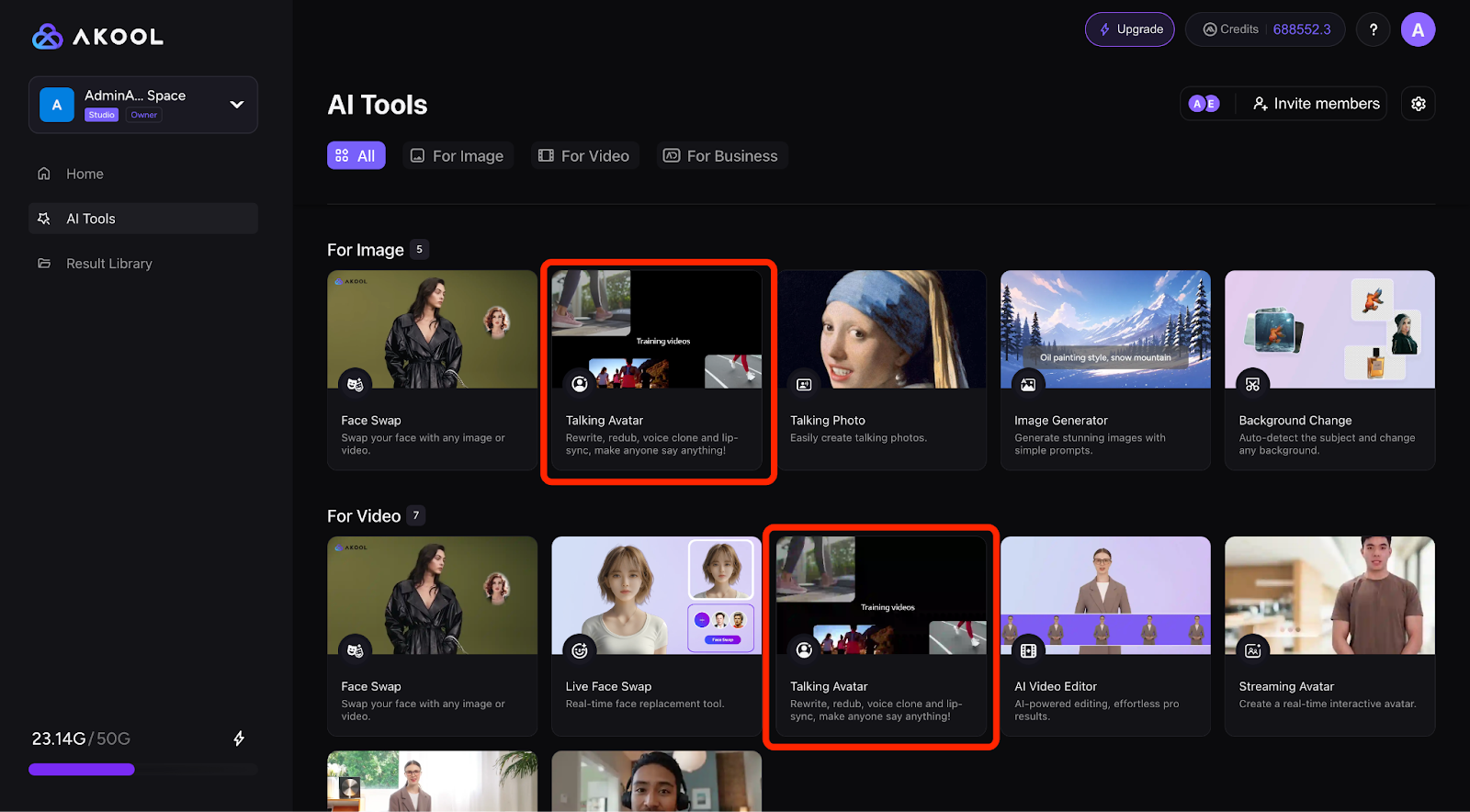
For AKOOL, verify the current plan comparison, account entitlements and applicable commercial terms. Use the account and billing guidance to locate the relevant plan information. A shared account or credit system does not imply that every workload, seat or product is included.
What should stay in a specialist workflow?
Retain a specialist when a critical requirement is unmet or cannot yet be verified. Examples include an essential finishing control, a downstream integration, a required editable file, a commercial-rights condition or a contractual commitment. Record the actual gap instead of assuming that a broad platform cannot handle an entire category.
Maintain a retain-specialist register with four fields: affected workload, unmet requirement, consequence of losing it, and accountable owner. Add evidence, contract dates and the next review condition. That register prevents a rarely used but essential system from disappearing inside a general subscription-cutting exercise.
Check portability at the level you need. A downloadable finished video does not establish that an editable project, source arrangement or associated assets can be transferred. Test the required files in their receiving workflow, including what another producer needs to revise them later.
Keep a specialist or defer the change when the gap would stop a critical deliverable. Optional convenience elsewhere cannot compensate for a required output that fails acceptance. For a broader selection framework, consult AKOOL's content-team scorecard; use this register to decide what can actually be retired.
How should a reversible pilot work?
Run one representative campaign while the existing workflow remains available. Do not cancel current tools merely because a demonstration looks promising. Fix the approved source versions, delivery requirements and acceptance gates before the pilot starts.
- Name owners. Assign a pilot owner, reviewers, decision owner and rollback owner. Establish who can stop the trial.
- Define the route. List required inputs, production steps, human handoffs, finishing, exports and the destination system. Mark every connection that needs testing.
- Set gates. Agree on output quality, product accuracy, language acceptance, rights, required controls and usable file formats. Define failure triggers for critical requirements.
- Run the campaign. Record actual execution, review and correction work. Distinguish active labor from waiting time, and preserve failed attempts as well as usable outputs.
- Test recovery. Confirm that sources and required assets remain accessible, and that the prior workflow can resume with the available files and people.
For an AKOOL candidate, map the campaign against the current documented capabilities and your account's actual access. Test connected execution rather than inferring integration from tools appearing in the same environment. The pilot must establish whether the complete route works for your team.
Log results only after observation. Until then, quality, labor, migration effort and coverage remain hypotheses. Define a rollback trigger such as a failed critical export or an unresolved acceptance blocker, with restoration steps and a named owner.
How do you decide to consolidate, retain or defer?
Use a three-way decision for each workload and contract:
- Consolidate when required coverage is verified, the complete pilot passes acceptance, and the full business case supports the transition.
- Retain the specialist when a critical gap or contractual dependency remains and the existing route still serves the workload.
- Defer when evidence, contract timing, migration readiness or rollback capability is insufficient for a decision.
Record the decision owner, covered workloads, evidence, cost assumptions, unresolved gaps, next review date and rollback conditions. Retirement is a separate action: schedule it only after the replacement meets the recorded gates and affected owners are ready.
This framework does not report an end-to-end migration pilot or a measured saving. AKOOL is a candidate to assess against your workload, not an automatic replacement for every specialist system. Map one complete campaign against current capabilities and terms, then use the observed result to decide which contracts can responsibly move.