
What should SKU fidelity mean in a vendor review?
Approve a creative vendor against SKU-specific acceptance criteria and an authorized reference pack. Record defects by severity, connect each finding to a frame or timestamp, and decide pass, revise or reject. Attractive visuals can support a campaign, but they do not establish correct product identity or prove real functionality.
SKU fidelity means the depicted item matches the particular product and variant you intend to sell. A bottle from the right brand can still have the wrong cap, capacity or label. A device can look convincing while showing a port the actual model lacks. Those differences belong in procurement acceptance, before a larger production commitment.
Separate three decisions: whether the creative style fits your brand, whether the product depiction is accurate, and whether the message makes supported claims. Passing one does not excuse a failure in another. AKOOL's reference workflow guide provides production background; use the acceptance framework below to judge the delivered result.
Which references should the buyer supply?
Create one approved reference pack per variant. Give the vendor a manifest identifying the current source of truth, rather than a folder of conflicting images. The merchandising owner should resolve discrepancies before the sample is evaluated.
| Manifest field | What to record |
|---|---|
| Product identity | SKU ID, product name, variant, size and market |
| Visual references | Versioned front, side, back and detail packshots |
| Specifications | Approved dimensions, materials, controls and included accessories |
| Exact text | Current logo artwork, packaging copy and required labels |
| Claims evidence | Approved product-page version and verified functional footage |
| Authority | Asset rights, reference owner, approval date and superseded files |
Distinguish a bundle from the standalone product. Mark accessories that are shown for context but are not included. For color variants, identify the approved reference for each color; do not ask reviewers to infer it from a name alone.
Also define the output's use: a concept for internal discussion, a product-page clip or a paid campaign. Agree which surfaces must remain visible and readable at the final size. An obscured label cannot be marked correct merely because the reviewer cannot inspect it.
Which defects should cause rejection?
Agree on severity before seeing the vendor's best sample. The following is a buyer-defined template, not a measured AKOOL performance score or a universal industry threshold.
| Check | Illustrative defect | Severity and required action | Decision owner |
|---|---|---|---|
| Identity and silhouette | Wrong model, capacity or component arrangement | Blocker: reject the affected output | Merchandising owner |
| Variant consistency | One color variant becomes another during motion | Blocker: correct and review the complete clip again | Product owner |
| Function and claims | Invented opening mechanism or unsupported capability | Blocker: remove or replace with verified evidence | Product or claims owner |
| Labels and packaging | Incorrect mandatory text, logo or pack quantity | Blocker where identity or required information changes; otherwise major | Packaging owner |
| Material and color | Metallic finish becomes plastic, or color changes materially | Major: revise before approval | Brand and product reviewers |
| Accessories | Incorrect included cable, attachment or bundle contents | Major, or blocker if the offer is misrepresented | Merchandising owner |
| Cosmetic treatment | Small background or reflection difference without product impact | Minor only with a documented permitted-use exception | Named brand approver |
A high overall aesthetic score must never cancel a blocker. Review at the intended display size and zoom in where identity depends on detail. Inspect the full clip: an accurate opening frame does not establish accuracy after a turn, zoom or transition.
Treat uncertainty as unresolved. If motion blur hides a required detail, request another view or a corrected output instead of assuming a pass. A minor exception must specify where the asset may run; it is not blanket permission for every channel.
How should the sample review be organized?
Use the same authorized variant pack and acceptance checklist for every vendor sample. Define the deliverables and review conditions in advance, including final crop, resolution and export format. Keep the review focused on outputs, without substituting a prompt-writing exercise for acceptance evidence.
- Register the sample. Record vendor, SKU ID, reference-pack version, output ID and output version.
- Review identity first. Check shape, variant, packaging and claims before judging polish.
- Log evidence. Record the timestamp or frame, expected detail, observed defect, severity and reviewer. Retain a still or clip that makes the issue inspectable.
- Assign the decision. Mark pass, revise or reject for that output and SKU. Name the correction owner and due date.
- Retest the replacement. Compare the new output with the same approved sources and preserve the earlier finding.
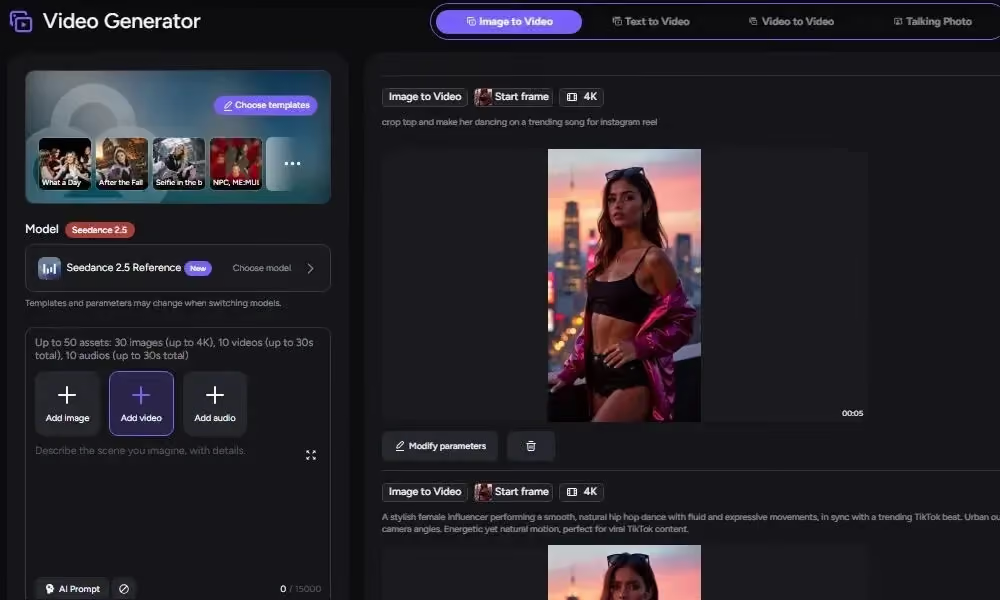
For an AKOOL sample, consult the current model guidance to confirm available input types, controls and the estimate shown before generation. Access and settings vary. Record the selected configuration so a later correction can be traced without assuming every workspace exposes the same options.
Hypothetical defect record: SKU DEMO-500-BLUE; reference pack v3; output sample-02, v1; timestamp 00:04.2. Expected: blue cap matching the approved packshot. Observed: cap changes to white. Severity: blocker for variant identity. Decision: reject this output; vendor production lead to supply v2; merchandising owner to retest the entire clip. This illustrates a log entry, not a test conducted for this article.
What should be corrected outside generation?
Choose the correction method that can satisfy the requirement. Exact packaging text may need approved artwork applied during controlled finishing. A functional demonstration may require verified footage of the real item. Repeating a prompt does not guarantee either result.
Use a controlled overlay when approved artwork can be tracked accurately onto the relevant surface. Check perspective, occlusion and movement across every affected frame. Review the final composite at export size; a correct source label does not prove the finished placement is readable or stable.
Use factual footage when the message depends on mechanics, dimensions or real performance. Keep generated atmosphere separate from evidence of what a product does. A synthetic scene showing a device operating underwater cannot establish water resistance.
If correction removes the very detail the buyer needs to inspect, the output remains unapproved for that purpose. Simplify the shot, change the deliverable or use an authorized real product asset. Record who owns finishing and include that work in the scope before expanding production. Confirm applicable plan and workspace terms separately from visual acceptance.
What evidence supports vendor approval?
Approve a defined output set, with defined permitted use. The acceptance record should include the final SKU and reference versions, approved output IDs, closed defect IDs, retest date, final approver, channels and any accepted exceptions. Keep evidence with the decision so another team can distinguish an approved asset from an earlier sample.
Use three outcomes consistently. Pass means all required checks are satisfied within the recorded scope. Revise means a correctable issue remains and a replacement needs review. Reject means the delivered output fails a blocking requirement or cannot meet the intended use. None of these decisions should depend on an undocumented verbal promise.
Retest corrected frames and the surrounding sequence. Changes to a source pack, variant, crop, overlay or functional claim can reopen acceptance. A vendor approved for one SKU is not automatically approved for the next variant or a different output format.
Prepare your approved SKU reference pack, then evaluate one AKOOL sample against the same criteria. Award a larger scope only when the retained evidence supports the decision.